
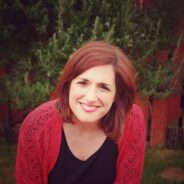
Dr. Alba Abad, Chair, RIBB-SAB
Dr. Alba Abad is the Engage Nepal with Science founder and director. She is a research scientist at the Wellcome Centre for Cell Biology (University of Edinburgh, UK) and an enthusiast of science communication and public engagement with science. After witnessing the strong impact of public engagement with research in local communities throughout the UK, she decided to combine her expertise in outreach together with her love for Nepal to launch Engage Nepal with Science in collaboration with RIBB. Her aim is to spread her passion for science while inspiring and sparking curiosity in Nepalese communities.
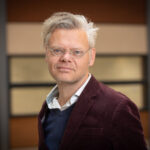
Prof. Remco Kort, Member, RIBB-SAB
Remco Kort is a Professor of molecular microbiology at the Vrije Universiteit in Amsterdam (appointed in 2010) and a specialist in applied microbiological research. His research focuses on the role of the microbiota in gut health and lactic acid bacteria in fermented foods leading to over 100 scientific publications (4,500 citations; h-index 36). He is the organizer of the annual lecture series The human microbiome in health and disease and its national Microbiome Award for MSc and PhD-students. In Amsterdam he co-developed ARTIS-Micropia, the only microbe museum in the world, which has been awarded with the Kenneth Hudson award for the most innovative museum in Europe. He authored the popular science book De microbemens (The microbe man, transl.) published by Athenaeum, Amsterdam, 2017. Kort has over 10 years of experience with research and innovations in East-Africa and South-Asia, where he co-founded the non-profit Yoba for Life foundation for the development of an educational program and a distribution network for innovative starter culture enabling the production of probiotic yoghurt.

Dr. Tobias Dörr, Member, RIBB-SAB
Tobias Dörr (Doerr) obtained his Master’s degree in Biology from the University of Hannover in Germany. Following his diploma thesis “finding new persister genes”, Dr. Dörr joined Dr. Kim Lewis’ laboratory at Northeastern University in Boston, Massachusetts, where he earned his doctorate with the dissertation “SOS response and the mechanism of adaptive tolerance in Escherichia coli”. Following his PhD research, Dr. Dörr joined the lab of Dr. Matthew Waldor at Harvard Medical School as a postdoc in molecular pathogenesis, working on cell envelope homeostasis in the cholera pathogen Vibrio cholerae. In 2016, Dr. Dörr joined the faculty of Cornell University in New York, where he is now an Associate Professor of Microbiology at the Weill Institute for Cell and Molecular Biology, the Department of Microbiology, and an affiliate of the Cornell Institute of Host-Microbe Interactions and Disease. His laboratory studies molecular mechanisms of bacterial stress responses, infection dynamics, and the molecular basis for cell envelope modifications in Gram-negative pathogens.
 Prof. Harald Gross, Member, RIBB-SAB
Harald Gross is a pharmacist by training and dealt during his PhD studies in Bonn/Germany and subsequent 2-years PostDoc stay in the USA with ´Drugs from the Sea´, i.e. marine natural product chemistry of marine sponges, soft corals and algae. Back at the University of Bonn, he established in 2006 his own independent research group and focused on the genomics and secondary metabolism of Pseudomonas bacteria. In 2012 he was appointed Full Professor for Pharmaceutical Biology at the University of Tuebingen. His research interests are in the field of genome-driven discovery of microbial secondary metabolites, biosynthesis research and genetic engineering.
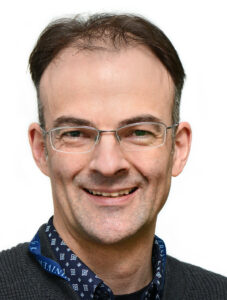 Prof. Neil Mabbott, Member, RIBB-SAB
Neil Mabbott graduated in 1992 with a B.Sc. (hons) in microbiology from the University of Leeds, UK. He then undertook a Ph.D. at the University of Aberdeen, UK, in Dr. Jeremy Sternberg’s lab. where he studied the role of macrophages in causing immunosuppression in African trypanosome infections. In 1995 upon completion of his Ph.D. He joined the Neuropathogenesis Unit at the Institute for Animal Health, where, as a postdoc, he began studying the immune system’s role in prion diseases (also known as transmissible spongiform encephalopathies). Neil now leads his own research group and serves as the Head of the Immunology Division and Director of Teaching at the Roslin Institute & Royal (Dick) School of Veterinary Studies, University of Edinburgh, UK. Neil was awarded a Personal Chair in Immunopathology in 2016. His research aims to understand the interactions of infectious diseases within the immune system. Particular interests include understanding host-pathogen interactions within the mucosal immune system, especially prion diseases and other gastrointestinal pathogens such as Salmonella and nematodes. Studies also focus on the effects of host age on immune system function and how this influences susceptibility to gastrointestinal pathogens. A systems biology approach is also being used to compare the transcriptomic profiles of distinct immune cell populations in the steady-state and during ageing.
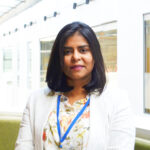 Dr. Dipali Singh, Member, RIBB-SAB
Dr. Dipali Singh is a Research Fellow at the Quadram Institute Bioscience, UK, specializing in metabolic modeling and computational systems biology. Her research focuses on genome-scale model reconstruction and flux simulation to study metabolic adaptability, with applications in biotechnology, food safety, and disease. Her research career includes Marie Curie fellowship work on diatom metabolic models at Oxford Brookes University, postdoctoral research on dynamic modeling of microalgae and plants in Heinrich Heine University and studies of foodborne pathogen adaptations at Quadram Institute. Currently, she integrates metabolic modelling and machine learning to investigate how the gut microbiome produces oncogenic metabolites influencing prostate cancer. She serves on the management teams for the BBSRC-funded Food Safety Research Network and AI in the Biosciences Network.